The International Women’s Network in Estonia (IWNE) is excited to launch a new monthly Reading Circle, bringing people together to explore books written by FLINTA** and/or BIPOC* authors.
More than just a book club, the Reading Circle aims to create a space for sharing perspectives, challenging ideas, and learning from experiences that may be similar to, or different from, our own.
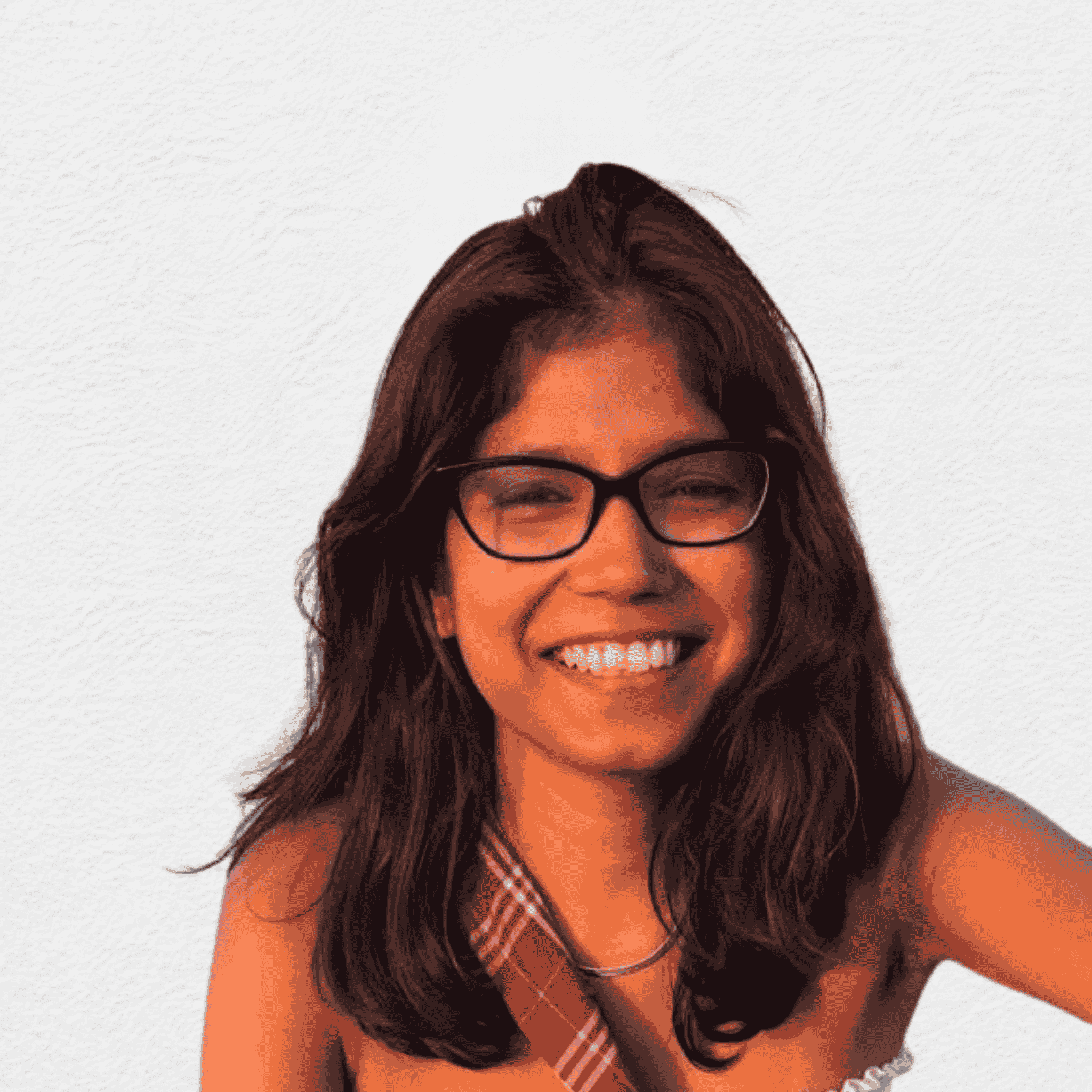
Khushi, the organiser of the Reading Circle, shares what inspired her to bring this initiative to life.
Why Books and Community Matter to Me
My team at IWNE asked me to write about my relationship with books and why I remain invested in building a community around them. It got me thinking about the time when books became an integral part of my life.
I vividly remember not being allowed to read novels and being told to focus only on educational books that were part of the school curriculum and that I would be graded on (the perils of the Indian education system – academic success is the only thing that matters). While this frustrated me, it did not really stop me.
My stubborn 13/14-year-old self started buying and borrowing books so that my family wouldn’t find out. Eventually, however, my family came around. When I was 15, my mother finally bought me a Kindle and thus began a reading habit that continues to this day. A habit that I eventually decided to turn into a career – by guess what? Doing a PhD.
The books I have read so far (the titles and number of which I have long lost count of) and the words within them have shaped my understanding of the world, informing me about what exists beyond my small neighbourhood in Delhi. That imagination made it possible for me to dream big and envision alternative realities and ways of existing. Fortunately, I have also been able to live (and continue to live) some of those dreams.
Yet, I sometimes find myself forgetting and neglecting this world. Amid the messiness and chaos of city life – chores, work commitments, care work, and so on – I am guilty of putting reading for pleasure and joy (rather than just for academic or professional reasons) on the back burner. Moreover, many of the books and other works I found myself reading, particularly as an economics student studying in France, Italy, and Estonia, were written by Western men. While useful, these works had only limited applicability to my life and circumstances.
I eventually wanted to break out of this habit and return to reading content that spoke to me, much like I did when I was 15. To kickstart this, I did what I do best – surf the internet for like-minded people. That’s how I came across IWNE’s report, Migrants’ Experiences: Racism and Xenophobia in Estonia. It made me feel less alone in my desire not just to document, but also to amplify, the voices of those who often remain understudied and unheard.
Building on this, I also decided to start a book club with IWNE’s generous support where we would focus on books written by FLINTA* and/or BIPOC* authors. The idea is to create a community space where we can engage with and (un)learn ideas about experiences that are similar to, and often different from, our own. Essentially, it is about taking up more space and giving the time, attention, and respect that our communities deserve but have so rarely been afforded.
Excited to have all of you join us in this journey! 💜
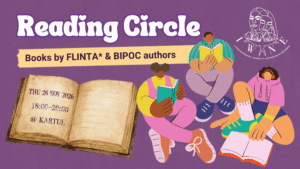
Join Us for Our First Reading Circle!
Our first gathering will explore Kim Ji-young, Born 1982 by Cho Nam-joo, a novel that examines gender inequality and the everyday experiences of women in South Korean society.
Event details
- Date: Thursday, 26 November 2026
- Time: 18:00–20:00
- Location: Kartul, Tallinn
- Language: English
- First book: Kim Ji-young, Born 1982 by Cho Nam-joo
Everyone is welcome to join! A digital copy of the book will be shared in the Reading Circle’s WhatsApp group. To become part of the Reading Circle:
We look forward to reading, discussing, learning and unlearning together!
*FLINTA stands for Female, Lesbian, Intersex, Non-binary, Trans and Agender people. The asterisk acknowledges that the term is open and inclusive of identities and experiences beyond those explicitly named.
*BIPOC stands for Black, Indigenous and People of Colour.