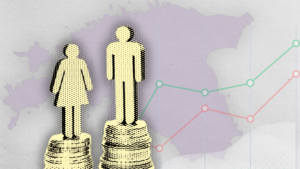
1 in 3 women worldwide will experience physical or sexual violence in her lifetime.(World Health Organisation, 2021)
1 in 8 women has experienced rape or sexual assault in childhood. (UNICEF, 2024)
6 in 10 female homicide victims are killed by intimate partners or relatives, whereas for men, only about 1 in 10 homicides occur within the private sphere. (UN Women, 2025)
These are not rare tragedies. They are patterns.
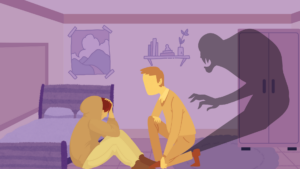
For generations, we have taught children to fear monsters under the bed, imagining creatures that hide in darkness, wait in closets, ready to emerge at night. But the statistics tell a different story. The danger is not imaginary nor confined to shadows, and it is rarely a stranger.
The monster was never under the bed.
It exists in homes, workplaces, schools, courtrooms, and digital platforms. It is normalised through everyday jokes, excused by culture, shielded by institutions, and minimised as “isolated incidents.” Gender-based violence is not an anomaly in otherwise healthy systems. It is embedded in structures of power that shape how societies define masculinity, authority, credibility, and control. Treating gender-based violence as deviant behaviour, the action of a few disturbed individuals, is to obscure both its scale and its persistence. It is not deviance but a pattern sustained by the way power operates.
The “Monster” We Like to Imagine
Public discourse often frames perpetrators of gender-based violence as monsters, aberrations from the norm. Media headlines emphasise shock and communities express disbelief. “He seemed so normal,” people say. “He was such a good man.”
But that is precisely the point. If 1 in 3 women experience violence, then perpetrators can not be rare. They are statistically ordinary people who hold jobs, attend family gatherings, vote, and teach classes. They occupy positions of authority.
The “monster” narrative is comforting because it isolates responsibility. If violence is committed only by pathological outsiders, the rest of society can remain innocent. Structural reform becomes unnecessary, replaced instead by the punishment of a few individuals. The data, however, contradict this reassurance. Gender-based violence cuts across class, nationality, religion, and race. It is not confined to dysfunctional households or marginalised communities. It is pervasive precisely because it is sustained by norms, hierarchies, and power relations that transcend individual pathology.
The monster is not separate from society. It is produced by it.
This Isn’t About Passion – It’s About Power
Contrary to popular belief, most sexual and physical assaults are committed by someone the victim knows. Intimate partner violence constitutes one of the most common forms of abuse globally (World Health Organisation, 2024), challenging the comforting myth of “stranger danger.”
Gender-based violence is frequently mischaracterised as a crime of passion – driven by jealousy, anger, intoxication, or emotional instability (Pichon et al., 2025). This framing obscures its political dimension. At its core, gender-based violence is about power: the assertion of control over another person’s body, autonomy, mobility, or voice (Benjelloun & HassanZrizi, 2023). It reflects deeply embedded assumptions about entitlement – who has the right to dominate, who must comply, and whose suffering is secondary.
Patriarchal structures have historically positioned men as heads of households and decision-makers. While laws have evolved, cultural expectations often persist. Women are still disproportionately expected to prioritise caregiving, preserve family unity, and manage emotional harmony (Sharma et al., 2016).
When these expectations are challenged – when women assert independence, reject advances, leave relationships, or claim authority – violence can function as enforcement. Homes, seen as spaces of safety, can instead become sites of control and fear. The privatisation of domestic life further hides abuse from scrutiny, allowing it to be dismissed as a personal dispute rather than a public concern (Romero Gutierrez et al., 2024).
However, even within reported cases, the numbers are disturbing. Every 10 minutes, a woman or girl is killed by a member of her own family (UN Women, 2024), and nearly 50,000 women are killed each year by intimate partners or relatives (UN Women, 2025).
When Systems Don’t Protect People
Gender-based violence persists not only because individuals commit harm but because institutions fail to respond adequately, and sometimes actively protect perpetrators. Victim-blaming narratives (What was she wearing? Why didn’t she leave? Why didn’t she report sooner?) shift scrutiny onto survivors rather than perpetrators. It reinforces the idea that women are responsible for preventing violence through their own behaviour.
The result is a chilling effect. Survivors weigh the cost of speaking out against the likelihood of disbelief, retaliation, or public humiliation. Silence becomes rational. Institutional inaction communicates a powerful message: stability and reputation matter more than justice.
Let’s talk about Sweden, the country that is seen as progressive, where gender equality is of utmost importance, and women are equally valued members of society as men. A nation often presented as proof that modern democracies can achieve gender justice. And yet, in 2025, the Court of Appeal for Upper Norrland upheld a rape conviction under Chapter 6, Section 1 of the Penal Code (Brottsbalken 1962:700) for the rape of a 16-year-old girl and confirmed a prison sentence for Yazied Mohamed (Hovrätten för Övre Norrland, 2025). The court, however, determined that the assault had not lasted long enough to be classified among the gravest offenses under the law. A rape of a 16-year old child was confirmed – and simultaneously ranked as insufficiently serious.
What does that tell other girls? That even when the system recognises the crime, it may still treat the harm as insufficiently severe unless it meets a technical standard. And what does it tell perpetrators? That violence can be timed, categorised, and – within the right legal margins – minimised. In a country synonymous with equality, that message is not just contradictory. It is chilling.
And what about Romania?
In Bălşan v. Romania (2017), a woman repeatedly reported severe domestic violence, supported her complaints with medical records, and informed authorities that her husband had assaulted her and locked her out of their home. The response was not criminal prosecution, but a minor administrative fine, with officials suggesting she had provoked the abuse.
Only after she brought the case to the European Court of Human Rights did the failure receive recognition. The Court found that Romania had violated its obligations, ruling that the state had been aware of the violence and failed to act. Even documented harm, it seems, was not enough to trigger meaningful protection.
And Cyprus?
In X v. Cyprus (2025), an 18-year-old British woman reported being gangraped while on holiday. She was interrogated for hours without a lawyer or translator, gave multiple statements, later retracted her allegation under pressure, and saw the investigation closed. Authorities emphasised the lack of physical injuries, relied on prior consensual encounters to question consent, and even convicted her of making a false complaint.
Only after she appealed to the European Court of Human Rights did the narrative shift. The Court found that Cyprus had violated Articles 3 and 8, citing serious procedural failings and a flawed assessment of consent. Once again, meaningful recognition of harm came not from domestic protection, but from external correction.
At what point does under-enforcement become quiet tolerance?
The problem is not limited to individual cases. Structural inequality remains written into legal systems worldwide. Women today hold only about 64% or less than two-thirds of the legal rights available to men (UN Women, 2026). In more than half of countries (54%), rape is still not legally defined based on consent, meaning the law may fail to recognise rape as a crime. When legal frameworks themselves fall short, institutional failure is not accidental but structural.
If the previous cases were isolated, they could be dismissed as exceptions. The numbers suggest otherwise.
In 2019, 55,259 rapes were reported in England and Wales alone. From that number, 1,659 cases were prosecuted. Just 702 resulted in convictions (Centre for Women’s Justice et al., 2020). Tens of thousands of allegations – hundreds of guilty verdicts.
These numbers are not a flaw in the system; they represent the system. When the overwhelming majority of reported rapes never lead to a conviction, the legal prohibition remains intact in theory but faulty in practice. A crime that is rarely punished does not disappear – it teaches survivors how unlikely justice is. It teaches perpetrators how unlikely accountability may be.
The Baltic Reality
The Baltic states are small. Their populations are measured in millions, not tens of millions. Yet the numbers on gender-based violence are anything but small.
Across the region, between one quarter and one third of women report experiencing physical or sexual violence since the age of 15 – 33% in Estonia and 25% in Latvia and Lithuania, close to the EU average of 31%. Among those victims, more than half report health consequences, and around one third report psychological abuse from a partner. Stalking affects up to 18% of women. (European Institute for Gender Equality, 2025)
And even these numbers are incomplete. Surveys consistently show that many victims tell no one; not friends, not family, and certainly not the police. In Europe, roughly 1 in 3 women who experience violence remains completely silent about it (European Institute for Gender Equality, 2025). Police statistics, therefore, reflect only the visible fraction.
What becomes visible is already disturbing enough.
Based on Ziņu aģentūra LETA (2026) statistics in Latvia, in one year alone, authorities registered 1002 crimes against sexual integrity and morality.
82% of victims were women.
81% were minors.
The average victim was 17 years old.
The youngest victim was 3 years old.
The oldest was 101.
Violence rarely came from strangers. In 71% of cases, the victim knew the perpetrator beforehand, most often an acquaintance or friend. 93% of offenders were men. And increasingly, the violence does not even require physical proximity. 42% of these crimes took place online.
In countries with populations this small, 1000 recorded sexual crimes in a year is not a statistical anomaly. And those are only the cases that surfaced.
“Text Me When You Get Home” Isn’t Just A Phrase
Few phrases reveal inequality as subtly as “text me when you get home.” It is not a law, nor a formal policy. It is a social reflex; it assumes risk and vulnerability. It assumes that the arrival must be confirmed. For many women, this ritual is routine: share your location, text upon arrival, stay on the phone while walking or in a taxi. These habits are normalised to the point of invisibility. Yet they signal something fundamental: safety is conditional.
This is not about abstract anxiety, it’s about lived experience. Gender-based violence shapes movement long before violence occurs. Routes are chosen based on lighting. Headphones are removed to stay alert. Clothing is reconsidered. Keys are held between fingers. These behaviours are not paranoia; they are precautions learned through observation, experience, and collective memory.
When the possibility of violence dictates how women move through public space, freedom is already limited. The issue is not whether women are legally allowed to walk home at night or speak publicly. It is whether they can do so without calculating risk.
Gender-based violence does not only harm through physical acts. It restructures behaviour. It produces self-monitoring. It redistributes responsibility for safety onto those most at risk. When “text me when you get home” becomes a universal practice among women, it reflects not individual fear but a social condition.
Teach Your Sons, Not Only Your Daughters
Safety conversations in many households follow a familiar script. Daughters are warned: don’t stay out too late, don’t walk alone, don’t drink too much, dress modestly. The advice comes from care, but it carries an underlying assumption – that girls must manage the risk.
How often do parents speak to their sons with the same urgency?
Do we explain consent clearly? Do we challenge disrespectful language towards women? Do we make it clear that silence is not agreement, that intoxication does not equal consent, and that rejection is not humiliation? Do we challenge jokes that reduce girls to objects, or do we dismiss them as harmless? Do we excuse early signs of aggression or entitlement with a shrug – “boys will be boys”? That phrase does more than dismiss behaviour, it lowers expectations. It frames harmful conduct as natural rather than correctable, suggesting that impulsiveness, dominance, and persistence are inherent traits instead of choices shaped by guidance and accountability.
Today, that guidance competes with something more powerful than ever before: social media. Many young boys are exposed daily to online personalities like Andrew Tate, Kevin Samuels, Russell Hartley, Nicholas Fuentes and Fresh&Fit who equate masculinity with control, ridicule women openly, and portray equality as weakness. Algorithms amplify these messages because they provoke reaction, allowing misogyny to be reframed as confidence and hostility as strength.
If parents are silent, those narratives fill the space.
Telling daughters how not to provoke implies that provocation causes violence. It shifts responsibility toward potential victims rather than toward those who may commit harm. Meanwhile, boys may internalise the notion that boundaries are negotiable and that rejection is an affront.
Prevention does not begin with stricter rules for girls, it begins with raising boys who understand that autonomy is absolute, that consent is non-negotiable, and that “boys will be boys” is not an explanation but an excuse.
If equality is to mean anything, it must start at home.
So What Are We Actually Dealing With?
Gender-based violence is not an aberration in otherwise functional systems. It is a reflection of how power is distributed, how credibility is granted, and how entitlement is taught. Calling perpetrators monsters may express moral outrage, but it risks obscuring structural responsibility. Monsters are anomalies. Structures are intentional.
If 1 in 3 women experience violence, then the issue is not deviance. It is order, not chaos.
The task, therefore, is not to search under beds for imaginary threats. It is to examine the institutions, norms, and hierarchies that allow harm to persist in plain sight. Structural change requires, amongst other things, comprehensive consent and gender education from early schooling, trauma-informed legal processes, economic empowerment to reduce dependency and cultural shifts that redefine masculinity away from dominance. Most critically, it requires dismantling the assumption that violence is inevitable. Only when we recognise gender-based violence as structural, not exceptional, can we begin to dismantle the conditions that sustain it.
Until then, the monster will remain exactly where it has always been: not hidden, not rare, but wearing a suit, embedded in the ordinary fabric of power.
References
Centre for Women’s Justice, End Violence Against Women Coalition, Imkaan, & Rape Crisis England & Wales. (2020). The decriminalisation of rape: Why the justice system is failing rape survivors and what needs to change.
UN Women. (2025, November 19). Facts and figures: Ending violence against women. https://www.unwomen.org/en/articles/facts-and-figures/facts-and-figures-ending-violence-against-women
UNICEF. (2024, October 9). Over 370 million girls and women globally subjected to rape or sexual assault as children – UNICEF: First-ever estimates on sexual violence in childhood reveal alarming prevalence, with devastating impact on children. Over 370 million girls and women globally subjected to rape or sexual assault as children – UNICEF
World Health Organization. (2021, March 9). Devastatingly pervasive: 1 in 3 women globally experience violence: Younger women among those most at risk. https://www.who.int/news/item/09-03-2021-devastatingly-pervasive-1-in-3-women-globally-experience-violence
World Health Organization. (2024, March 25). Violence against women. https://www.who.int/news-room/fact-sheets/detail/violence-against-women
Pichon, M., Stern, E., Sharma, V., Kyegombe, N., Stöckl, H., & Buller, A. M. (2025). The role of jealousy and infidelity in intimate partner violence against women: A qualitative meta-synthesis of five studies. BMC Public Health, 25(1), 3502. https://doi.org/10.1186/s12889-025-24743-4
Benjelloun, Z., & HassanZrizi, H. (2023). Violence and gender power: A theoretical distinction between violence and dominance. International Journal of Social Science and Human Research, 6. https://doi.org/10.47191/ijsshr/v6-i7-34
Sharma, N., Chakrabarti, S., & Grover, S. (2016). Gender differences in caregiving among family caregivers of people with mental illnesses. World Journal of Psychiatry, 6(1), 7–17. https://doi.org/10.5498/wjp.v6.i1.7
Romero Gutierrez, L., Izaguirre Choperena, A., & López Belloso, M. (2024). The study of gender-based violence through a narrative approach: Evidence from the European project IMPROVE. Social Sciences, 13(7), 330. https://doi.org/10.3390/socsci13070330
European Court of Human Rights. (2017, May 23). Bălșan v. Romania (Application No. 49645/09). https://hudoc.echr.coe.int/eng#{%22itemid%22:[%22001-173619%22]}
Hovrätten för Övre Norrland. (2025, September 9). B 1393-24 (Dom).
European Court of Human Rights. (2025, February 27). X v. Cyprus (Application No. 40733/22). https://hudoc.echr.coe.int/fre#{%22itemid%22:[%22001-241992%22]}
European Institute for Gender Equality. (2025). Violence in the European Union – Gender Equality Index 2025 edition. https://eige.europa.eu/gender-equality-index/2025/domain/violence
Ziņu aģentūra LETA. (2026, February 27). Dzimumnoziegumi Latvijā: jaunākajam upurim bija tikai trīs gadi. NRA.lv. https://nra.lv/latvija/515110-dzimumnoziedznieku-upuru-vecums-svarstas-no-3-lidz-101-gadiem.htm
UN Women. (2024, November 25). One woman or girl is killed every 10 minutes by their intimate partner or family member. https://www.unwomen.org/en/news-stories/press-release/2024/11/one-woman-or-girl-is-killed-every-10-minutes-by-their-intimate-partner-or-family-member
UN Women. (2025, November 24). Every day, 137 women and girls are killed by intimate partners or family members. https://www.unwomen.org/en/news-stories/press-release/2025/11/every-day-137-women-and-girls-are-killed-by-intimate-partners-or-family-members
UN Women. (2026, March 4). No country in the world has reached full legal equality for women and girls. https://www.unwomen.org/en/news-stories/press-release/2026/03/no-country-in-the-world-has-reached-full-legal-equality-for-women-and-girls#:~:text=New%20York%20%E2%80%93%20On%208%20March,Women%20Executive%20Director%20Sima%20Bahous
-

I’m Liisa, a junior researcher in molecular biology and forensic genetics. I hold an MMSc in Forensic Science and work with DNA, data, and the kinds of questions that sit somewhere between science and society.
My background is in genetics and biomedical research, and I’m interested in how evidence shapes conversations about women’s autonomy. I value clarity, good methodology, and arguments that hold up under scrutiny.