When I first read the piece on ERR news about Estonia’s stance on pay transparency, my reaction was basically: here we go again. Not because the topic is boring, but because it feels very familiar. The country knows it has one of the biggest gender pay gaps in the EU, and yet every time there is a chance to tackle it more seriously, the conversation turns into whether it’s “too complicated” or “too much work” for employers.
The article focuses on criticism from Gender Equality Commissioner, Christian Veske, who argues that the government’s current plan won’t actually fix the problem. His point is pretty straightforward: if you only make small tweaks, you get small results. If the issue is structural, then surface level fixes aren’t going to cut it.
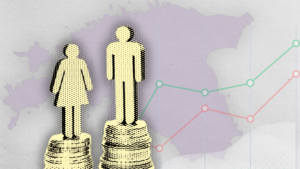
Estonia’s pay gap has been hanging around for years. Depending on the method of measuring it, women earn somewhere between 13 to 18 percent less than men. That’s not a tiny difference you can brush off as coincidence. It adds up over time, affecting savings, pensions, and overall financial independence. It’s not because women are less educated or less active in the workforce. If anything, Estonian women are highly educated and very present in working life.
And yes, the latest data shows the gap has narrowed to a record low. That sounds like progress, and it is; but at the same time it’s still the highest in the EU, which puts “record low” into perspective. The problem isn’t disappearing, it is just shrinking slowly, and the question is whether Estonia is doing enough to push it down further or just letting it improve on its own.
So where does the gap come from?
A big part of it is the kinds of jobs women and men end up in. Women are much more likely to work in education, healthcare and social services – think teachers, nurses, caregivers, administrative roles in public institutions. These are jobs that are absolutely essential. Society would fall apart without them. But they tend to be paid less. At the same time, men dominate fields like IT, engineering, construction, and higher-level management. These roles often come with higher salaries, better bonuses, and more opportunities to move up quickly. Estonia’s tech sector in particular is a huge part of the economy, and it’s still heavily male. So right away, you get this split where the “valuable” jobs in terms of pay are concentrated in male-dominated sectors.
But it’s not just about choosing different careers. Even within the same workplace, differences can creep in. Two people doing similar work might be paid differently because one negotiated harder, or because of unconscious bias, or just because salaries were set years ago and never properly reviewed. And here’s the key issue: most of the time, no one really knows. Salaries are often treated like private information, so it’s hard to compare or question anything.
That’s where the EU’s pay transparency directive comes in. The idea is pretty simple. Make salaries more visible, and it becomes harder to justify unfair differences. Employers would have to share salary ranges in job ads or before interviews. They wouldn’t be allowed to ask what you earned at your previous job, which is actually a big deal because that question can lock people into lower pay. Larger companies would also have to report on gender pay gaps and fix them if they’re significant. Estonia’s own Ministry of Economic Affairs and Communications has outlined similar goals around transparency, at least in principle.
The Estonian government isn’t completely rejecting these ideas, but it’s clearly hesitant. The main argument is that all this reporting and structure would create extra bureaucracy for businesses. And sure, from a company’s perspective, it probably does mean more paperwork and more systems to manage. But that’s the trade-off – if you want fairness, you need some level of oversight.
“…Estonia would rather pay a fine from the EU than create more bureaucracy for businesses. The government wants the deadline pushed back by two years to 2028.” That line says a lot. It suggests that even with the pay gap still leading the EU rankings, reducing administrative burden is being prioritised over pushing for faster change.
Veske’s criticism is that the government is focusing on the easiest parts, like salary ranges in job ads, while avoiding the more impactful changes. He essentially calls these steps cosmetic, which sounds harsh but also quite accurate. Knowing a salary range before you apply is helpful, but it doesn’t tell you what happens once you’re inside the company. It doesn’t show whether men and women are being promoted at the same rate, or whether there are pay gaps between colleagues doing the same job.
What makes this more frustrating is that Estonia already has laws saying men and women should be paid equally. On paper, the principle is there, but in practice – the gap hasn’t disappeared. That suggests the issue isn’t about having the rule, it’s about enforcing it and actually seeing what’s going on inside workplaces.
There’s also a cultural layer to all of this. Estonia is modern in many ways, but traditional expectations haven’t fully disappeared. Women are still more likely to take on caregiving roles, whether that’s raising children or looking after family members. That can mean career breaks, part-time work, or slower progression, while at the same time, leadership positions are still mostly held by men, especially in the private sector.
So women end up carrying a double load. They’re expected to build careers and be active in the workforce, but also handle more of the responsibilities at home. Over time, that affects earnings and opportunities. It’s not always visible in the present, but across years, it adds up.
Estonia has had time to improve things without strict transparency rules, and the gap is still there. That’s likely the reason why people like Christian Veske are pushing for stronger measures. From that perspective, transparency isn’t about punishing companies, it’s about finally making the problem visible enough that it can’t be ignored.
For women in Estonia, this debate is about trust. If employees believe that pay systems are fair and transparent, it changes how they see their workplace, while if everything feels hidden and arbitrary, it creates frustration and doubt. Transparency doesn’t fix everything, but it does shift the balance more toward accountability. What’s interesting is that Estonia is usually proud of being open and digital – government services are transparent, data is accessible, and systems are efficient and applying that same mindset to pay wouldn’t seem like a huge leap. In that way, it seems to fit the country’s identity and the hesitation seems to be less about capability and more about willingness.
At the end of the day, the debate isn’t really about paperwork or directives. It’s about how much inequality a society is willing to tolerate, and how serious it is about fixing it. Estonia has the tools and the knowledge; the question is whether it’s ready to actually use them.
References:
https://news.err.ee/1610003140/government-s-pay-transparency-steps-will-not-fix-gender-pay-gap-says-commissioner
https://news.err.ee/1610004331/estonia-s-gender-pay-gap-narrows-to-new-record-low
https://stat.ee/en/news/lowest-ever-gender-pay-gap-recorded-estonia-last-year
https://www.mkm.ee/en/work-and-equal-opportunities/employment-relationships-and-work-environment/pay-transparency