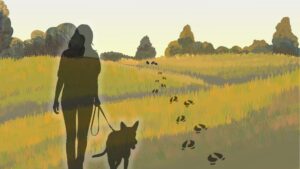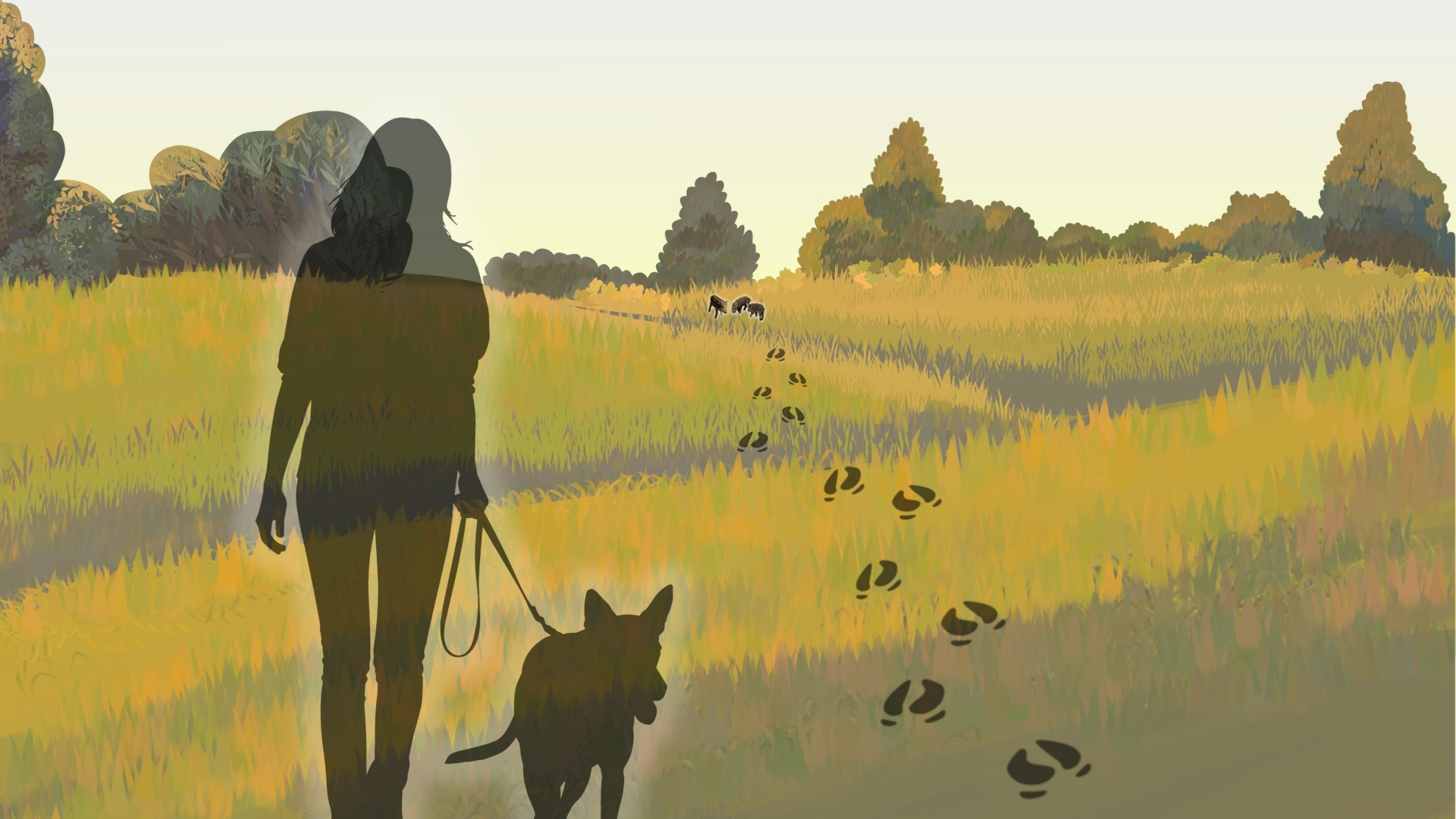
Several years ago, I sought refuge on countryside roads as my dog was terrified of traffic, and there are still more cars in this town than, it sometimes seems, functional brains (apologies). We set off on pre-dawn walks to return home before ‘the cars woke up’. That was when our encounters with the wild boar began. I had never met wild boar before. I had, however, heard tales of horrors. According to these urban myths, wild boars came across as vicious but reliable instruments for producing evenly-flattened and uniformly unlumpy human pancakes. All one had to do was position the minceable individual between a sow and her piglets.
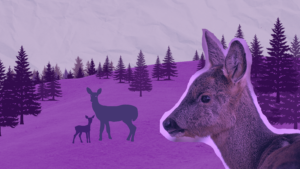
In many stories, wild boar were portrayed as rampaging, indiscriminate (I choose the word deliberately) devastators. I mistrusted these fables because wild boar used to be worshipped by the Prussians, a group of ancient Baltic tribes, who were described by nobody other than the highly judgmental Christians, as homines humanissimi. I doubted that the Prussians, exceedingly charitable towards everyone (except towards Christians) and as agriculturally-crazed as the rest of the Balts, would have pinned to their chests, as representation of their gods, imagery of beasts of destruction. Further, I equipped myself with a couple of curious scientific facts, such as that wild boar mothers can adjust the size of the unborn foetuses in their wombs (extreme environmental adaptivity) and that sows allo-nurse their young which means that any piglet can sneak ‘a sip’ out of any willing mother present in the sounder (flexible sociobiological roles).
I was intrigued. While I did not subscribe to the ruination hype, there was something powerful and wonderful about considering a female with a body so formidable, potent and apparent that she needed no politics, no social security, no debates to make her will and values perceived with such terminal clarity. Regardless of whether or not such a female would trample a threat to her kids to a pulp, it was magnificent to imagine physical presence that was more expressive of her truths, at a single sight, than any long-winded philosophies. She needed not prove her values, nor justify them. She embodied them, undeniably, and with a certain nonconformist finality. To be a tiny piglet and to learn the fiercest values by cuddling up to them, by deriving one’s dreams from their living warmth…
Soothed by rational doubt and enchanted by facts and imaginings, I, nevertheless, jumped each time we sensed a wild boar nearby. Perhaps it was because women of formidable presence have not always been kind to me. I find that a certain pressure exists for women who are deemed ‘manly’ with regard to their specific qualities (e.g., body size). These women are viewed as competitors. Men will go to great lengths to ‘disqualify’ them. Once a ‘manly trait’ becomes disqualified (yes, she is big but she is not enduring, stoic etc.), it becomes berated and censured, because it is considered a quality only in a man with a similar property. If large women wish to retain the same standing as men have, they cannot be big and soft. They need to prove they can be hard. Sometimes, brutal.
These women have to figure out how, during a single lifetime, to muster a degree of ‘no-nonsense authority’ that men have accumulated over thousands of years of tyranny, genocide and other forms of terrorism. Meanwhile, men are assigned this authority by social default without a need to, individually and contemporaneously, wipe out nations to be regarded as sufficiently decisive. The brutality is often directed at those whom ‘soft, oversensitive women’ would otherwise seek to ‘mother’, i.e., at children, pets, weaklings. Being weeny, weepy and wimpy, I have served as a pawn in these power games. Curiously, from such a perspective, I have been persecuted as a threat to ‘true values’. In more compassionate individuals, the violence is directed against the woman’s own self whereby the large woman ought not to expect to be relieved from physical hardships, and ‘restrain’ must be shown at all times. I believe there is a lesson in how urban (‘civilised’) men are intimidated by wild boar females who retain their own values in their ‘lethal’ bodies. The lesson is, also, therein lies the fact that these females will be slandered and shot.
To conclude, Big People, human or boar, make me jumpy. Having read that wild boar eyesight was relatively poor; to avoid trouble, I adopted a strategy of speaking aloud each time I heard them nearby so that our presence was made clearly known. Mostly, I talked to my dog but sometimes I dared utter a shy, “GOOD MORNING!”
First Close Encounter
Our first close encounter of the fifth kind occurred when we stumbled into a sounder which was about to cross the road just as we were approaching. We stopped at a polite distance, and waited while the sounder organised.
I was fascinated. It is difficult to coordinate excited little kids, yet maize here the adult sows were steering approximately twenty piglets (most of whom sensed something seriously adventurous was up) from one tall maize field into another – across a road no wider than five metres. The piglets were all over the place, not too bothered to quit the fun rustle and to file up. The sows did not appear to instil any alarm in the piglets, either. Two of the sows (the matriarch and one of her adult daughters) stationed themselves on either side of the road. They reminded me of the stone lions that are sometimes placed to guard the gates to a palace (or to a pretentious person’s private property). The sows were not, outwardly, making any effort to herd the piglets. The third adult sow was roaming in the maize but there was no flushing and driving.
I was struck with the realisation that this was not an avoidance and escape scenario. The piglets were becoming familiar with us, and they were permitted to express their curiosity and their excitement in motion and play. Moreover, it suddenly seemed to me that the two sentry sows were not sitting there idly. I had a feeling that just the way the piglets were running their attitudes on the land of their home, the sows were running attitudes of a similar intensity, inside their bodies. It seemed they were finding a place for us in their lives, in their livelihoods, in their country, and while the piglets were exploring the potential of the games we could introduce, the sows were searching through their history of genetics and blood and flesh. It was a strange notion, but I believed that in order to accept us, as immigrants, into their home, the mothers were rooting (for) us, digging through themselves to…sow us in.
Later I wondered whether the lack of hospitality nowadays towards immigrants might be the result of a weak (too abstract) history or, more precisely, of a land in which there are few who can run the history through their bodies, in whose bodies it is embedded. We chop down old trees, we plough up our soils, we shoot large mammals before they attain the ability to accumulate so much bio-memory that they could root anybody as deeply into their land’s heritage as required.
Is the history of the Baltic region not rich and diverse enough to find, within it, an identity for anyone and everyone? To feel it back through the centuries, when these lands were not just a battlefield for incessant wars between the hippest European superpowers, but when the Finns, the Norsemen, the Slavs, the Germanic tribes, even the Greek and the Romans mingled for exciting adventures (not all of which implied raiding and the collecting of tributes)?
Is it coincidental that Christianity, with its denial of nature and its agricultural intensification, also came with great misgivings towards innovation, and with contact exchanged for conflict? Do our fears and animosity begin where our natural world can no longer run new stories through ancient histories, current hopes through its values; where its soil no longer holds memory, no longer binds together? The wild boar sows made me recognise the importance of living history. When a sow digs up the earth, it is revived. When we dig the earth, it forgets and it fades.
The two sows reminded me of traffic guards managing the flow of peoples through their country, intent on welcoming even those who came with a history of hurt. I was touched by this intuition. I had been walking there, seeking haven for us and a better education for my dog. We came with pain, fear, rejection. But we also brought with us, and brought up, the history of blood between humans, dogs and wild boar. Still, the sows were prepared to process our difficult data against their experience. The piglets, meanwhile, did not appear to want to stop “integrating” us, and there was no true traffic moving along. There was just play, something one would not often find in the world of cars (outside of racing and demolition derbies). Eventually, however, the sows began initiating movement, and I realised they had been sensing my disquiet.
My dog is incredibly playful. If we meet another dog, she wants to play. If we meet a 0.25 kg squirrel, she wants to play. If we meet a 400 kg moose, she wants to play. Some 800 kilograms’ worth of wild boar biomass in total would not put her off play. She wanted to join in, and I was having trouble holding her back. It dawned upon me (it was probably dawn by that time, literally) that the sows recommenced the traffic upon learning that I was ill at ease. I had not spoken up, I had hardly moved at all, but they had heeded me. The elder sows disappeared into the maize, and the piglets somehow knew to trot along, as if there was no excitement that could not be overruled by the blood calling out its values of respect and consideration for another living being. I examined the maize field where the piglets had been rambling. I was concerned about damage. I found none. The tinies had been wriggling like little beetles. I came to a faith that the sows, by running the effects of our encounter through their bodily understanding, had ensured against injury to their land.
Thankfully-Not-Last Close Encounter
Our second close encounter occurred later in autumn, after the harvests. I had caught a nasty cold. I heard the wild boar on our left side, rather further afield, but I was unwilling and unable to speak up. Thus, we kept walking on, but soon we turned around, as our trail did not loop. As we passed by the wild boar again, the sounder unexpectedly bolted and dashed in our direction. I cannot say what had spooked them. Be that as it may, they took off toward the forest. To get there, they had to cross the road, and we were on that road.
They had not noticed us. It was the dead of a windless night, and I could not afford a flashlight. The course they had taken implied they would stampede right over us in about ten seconds, and they had had a huge head start to accumulate the inertia. Besides, wild boar tend to run almost in file. Even if the “lead” managed to steer aside at the last moment, would the “tail” notice and follow? We could not outrun the boar. It was too late to try. So I stood to face the sounder, and I said (remembering their “traffic guarding culture”), “PLEASE OBSERVE CAUTION!”
It was ridiculous. Human beings are known not to hear me when I am talking a mere metre from them, in quiet indoor settings. My throat was husky from the sniffles. I could not even yell. But the matriarch sow leading the herd swerved the rest of her sounder away from us! It had to have taken enormous effort, as she mobilised a physical command that not only veered the nearby pigs off the former course (by a significant angle) in a matter of seconds, but also reverberated through the whole company of approximately twenty-five large individuals.
To consider (if we allow for it) that these adjustments were not merely based on bossing others around, but that they were value- and history-based – the matriarch, with the power of her presence alone, convinced a herd in a rush-force run to spare a human and a dog. The sow could not shout out instructions or warnings. It was a bodily attitude. And I began suspecting the wild boar had synced their internal values with the physical environment to such perfection that their home became adapted towards making impossibly (without nature’s help) kind, minute decisions.
What the sow accomplished was equal to throwing a tank off its track. The boar live in a world not merely of headstrong, but of body-strong (body-sensitive) traffic. Human best intents, meanwhile, often spin out to be unfeasible and unsustainable, uncoordinated with nature. Given that old and large females govern migrant traffic and settlement in most large mammal populations (and it has not been studied whether females only “process” migrants of their own species or of several species), I find it plausible that there might be certain physiological chemicals that ensure a mutual responsiveness between the large female bodily attitude and environmental factors.
Perhaps there is a difference between environment (hardware) and nature (software), and females (via biological and social mechanisms and exudates) are capable of coding the software. The principles governing the laws of chemistry, physics and anatomy, meanwhile, might be “software-based” rather than “hardware-based”, and nature itself might respond mildly if it has been advised, by the females, that the local community is delicate; or it may pose challenges to an adventure-minded people.
There is a theory (of mine) for you to think about. One might imagine that processes of integration could benefit from a presence akin to that of the elder females in many animal societies – individuals who, through embodied experience, mediate encounters and hold space for newcomers, perhaps most naturally in shared, open environments such as beneath old trees. What ought we to believe? The narratives shaped by fear and conflict? Or the deeper histories in which blood was understood to carry values – so boarish yet so profoundly humane? Whose example should we follow in how we run our lands?
References
ADAM OF BREMEN, & TSCHAN, F. J. (2002). History of the Archbishops of Hamburg-Bremen. Columbia University Press. http://www.jstor.org/stable/10.7312/adam12574, Book Four, pp. 199
Marlène Gamelon, Mathieu Douhard, Eric Baubet, Olivier Gimenez, Serge Brandt, Jean-Michel Gaillard; Fluctuating food resources influence developmental plasticity in wild boar. Biol Lett 23 October 2013; 9 (5): 20130419. https://doi.org/10.1098/rsbl.2013.0419
Arnold LC, Habe M, Troxler J, Nowack J, Vetter SG. Rapid establishment of teat order and allonursing in wild boar (Sus scrofa). Ethology. 2019; 125: 940–948. https://doi.org/10.11111/eth.12950