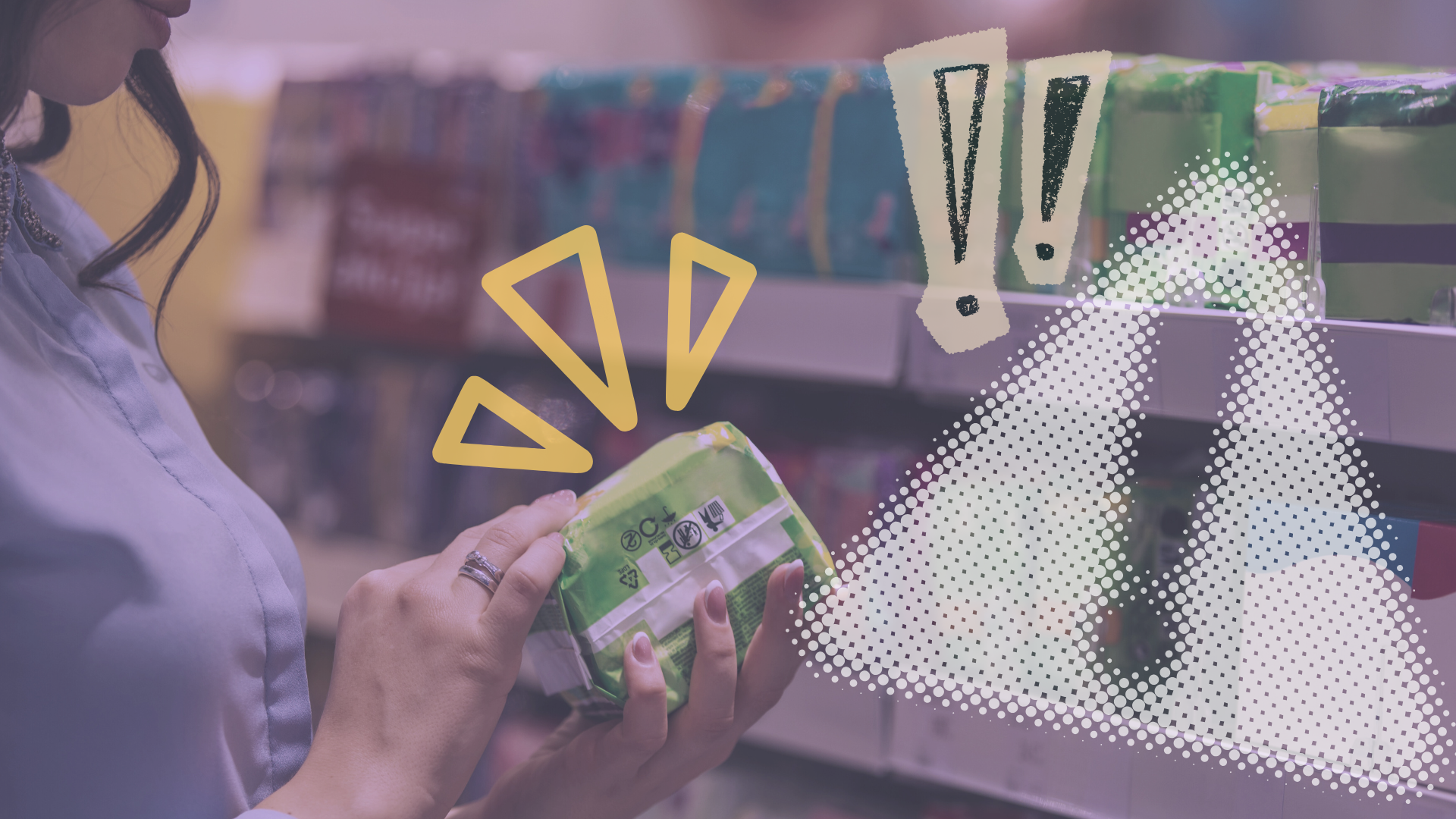
Recent reporting in my home country of South Africa has drawn attention to a peer-reviewed study from the University of the Free State (UFS), published in Science of the Total Environment, which found endocrine-disrupting chemicals (EDCs) in commonly sold sanitary pads and panty liners (Blignaut et al., 2026).
Although the research was conducted in South Africa, its relevance extends well beyond one country. Many menstrual product brands are manufactured and distributed internationally, including across the European Union. For all women, the findings are worth understanding.
What are endocrine disruptors?
Endocrine-disrupting chemicals are substances that interfere with the body’s hormonal system. Hormones regulate reproduction, metabolism, thyroid function, mood and development. Some EDCs can mimic oestrogen or block natural hormonal signals.
The study examined three main groups of chemicals:
- Phthalates (plasticisers used in adhesives and flexible plastics)
- Bisphenols, including bisphenol A (BPA)
- Parabens (preservatives with weak oestrogen-like activity)
These chemicals are common in consumer products and can migrate out of materials over time.
What did the study find?
Researchers analysed 16 sanitary pads and 8 panty liners and detected endocrine disruptors in every product tested.
Key findings included:
- Phthalates in 100% of panty liners and 50% of pads
- Bisphenols in 100% of pads and 75% of liners
- Parabens in the majority of products
Bisphenols were the dominant chemicals in pads, while phthalates were more prevalent in liners. Most notably, estimated exposure to BPA from these products exceeded the European Food Safety Authority’s current tolerable daily intake under standard absorption assumptions. When higher absorption rates (relevant to vulvar tissue) were considered, the exceedances were even greater.
Why does this matter?
Menstrual products are worn in direct contact with highly absorbent genital skin for several days each month, often for 30 – 40 years of a woman’s life. Unlike many other consumer goods, they involve repeated, long-term exposure in a sensitive area.
Individually, some chemical levels were below established safety limits. However, the researchers emphasised cumulative exposure, i.e. from multiple chemicals and multiple sources, as an area of concern.
Endocrine disruptors have been associated in broader research with fertility problems, endometriosis, thyroid disruption, earlier puberty and hormone-sensitive cancers. While this study did not test health outcomes directly, it highlights menstrual products as a previously under-recognised exposure pathway.
According to the National Consumer Commission (NCC) of South Africa, the following menstrual product brands were among those whose pads or liners were tested in the study that found endocrine-disrupting chemicals (EDCs) such as phthalates, bisphenols and parabens.
Widely available in the EU:
- Kotex – manufactured by Kimberly-Clark
- Always – by Procter & Gamble
- Libresse – by Essity Hygiene and Health AB
- Lil-lets – by Premier Group of Companies
Limited or unclear availability in the EU:
- Flo – sold under Here We Flo
- Stay Free – by Johnson & Johnson
What about Estonia and the EU?
The European Union has strong chemical regulations under REACH, and BPA and certain phthalates are restricted in some products. However, menstrual pads and tampons are often regulated as general consumer goods, not medical devices. Ingredient disclosure is limited, and manufacturers are not always required to list all chemical components.
Because supply chains are global, Estonian consumers cannot assume that similar products are entirely free from these substances. The study also found that products marketed as “organic” or “plant-based” still contained measurable endocrine disruptors.
Practical steps for consumers
There is no need for panic, but informed choice matters. Women may wish to:
- Choose unscented products (fragrance is often linked to phthalates)
- Consider reusable options such as menstrual cups or washable pads/panties
- Support brands that provide transparent material disclosures
- Reduce overall exposure to plastics and hormone-active chemicals where possible
The bigger issue: transparency
The most important takeaway is not fear, but transparency. Menstrual products are essential healthcare items used for decades. Yet their chemical composition is rarely clearly communicated.
For women across Europe, this research reinforces a simple point: we deserve full information about what comes into contact with our bodies, especially when that contact is intimate, repeated and long-term.
Greater transparency and updated regulatory scrutiny would ensure that menstrual health products are not only effective, but demonstrably safe.
References
- Blignaut, J., Kemp, G., Erasmus, E., Visser, H. G., & Schutte-Smith, M. (2026). The presence of endocrine disrupting chemicals in sanitary pads: A study done in South Africa. Science of the Total Environment, 1018, 181510. https://doi.org/10.1016/j.scitotenv.2026.181510
- eNCA. (2026). Further tests ordered on sanitary products after chemical findings. https://www.enca.com/news-top-stories/further-tests-ordered-sanitary-products-after-chemical-findings
- IOL. (2026, March 2). Women’s department demands answers over chemicals in period products. https://iol.co.za/news/south-africa/2026-03-02-womens-department-demands-answers-over-chemicals-in-period-products/
- MedicalBrief. (2026, February 20). Harmful chemicals found in SA sanitary products – UFS study. https://www.medicalbrief.co.za/harmful-chemicals-found-in-sa-sanitary-products-ufs-study/
- Sunday Independent. (2026, February 20). Sanitary pads shocker: The silent attack on women’s bodies. https://sundayindependent.co.za/dispatch/2026-02-20-sanitary-pads-shocker-the-silent-attack-on-womens-bodies/
- The Conversation. (2026). Menstrual pads and tampons can contain toxic substances: Here’s what to know about this emerging health issue. https://theconversation.com/menstrual-pads-and-tampons-can-contain-toxic-substances-heres-what-to-know-about-this-emerging-health-issue-268470